
I have always had a love for furniture and lighting, and am very aware of the role that quality construction, scale, and proportion play in creating a piece of furniture that will last for generations. One of my favorite lines of furniture and lighting is Niermann Weeks. Look closely at any top design magazine, and in every issue you will find at least one, and more often several pieces of Niermann Weeks furniture or lighting used in the designs of the most beautiful homes in America and around the world. It is a favorite of the top designers; the designs are truly beautiful, often based on the most exquisite antique furniture, but interpreted for modern needs and requirements. The lighting is truly exceptional - the designs are unique and creative, and often define any room in which they are installed. Just this weekend, it was announced that Niermann Weeks won the Luxist Readers' Choice Award in the category of best lighting, a well deserved honor.
Through my blog, I have become friends with Eleanor McKay, the CEO and C0-Founder of Niermann Weeks. She will often email me directly after a post of mine has particularly struck her, and we have had some lively discussions about trends in furniture and design in the 21st century. Eleanor's husband Joe Niermann is the Chairman and Co-founder of Niermann Weeks, and is also the principal designer for the company. Joe agreed to answer some questions for me as part of my inspirational design series.

Joe Niermann of Niermann Weeks
How did you decide to pursue a career in furniture design?

A bank in Owatonna, Minnesota, designed by architect Louis Sullivan, was an inspiration for the young Joe Niermann. Image via Wikipedia.
Mostly it was serendipity. I had always been interested in design -- especially architecture. By age eight I was building models in my sandbox and reading everything I could find on architects and artists. I was born in Madison, Wisconsin, home of Frank Lloyd Wright, who became a real model for me. He had apprenticed under another renowned architect, Louis Sullivan, who designed a very famous bank in Owatonna, Minnesota where I grew up. Sullivan had also designed the building where my father worked and several local residences. By my middle teens I had read all of Wright's books and made pilgrimages to building by all the Prairie School architects in Minnesota and Wisconsin.

When I was twelve, I made drawing of a woman and child. It’s pencil-drawn, and I wanted to see if I could make a decent copy. When I was thirteen I was lucky enough to have my first one-man show at the Sullivan Bank in Owatonna, but I didn’t keep pen and ink drawings.

Sullivan's Auditorium in Chicago was also an early architectural inspiration for Joe (image via Wikipedia)
In my early twenties, I had to drop out of school to support myself. I moved to Chicago, America’s architectural capital, and ended up working in an insurance office only a few buildings away from Sullivan's Auditorium (pictured above). The staff there let me roam the building and really study its perfect construction. When I got married, Eleanor and I headed back to Madison, Wisconsin where she was completing her master's degree in history at the University of Wisconsin. I felt we had returned to the heartland of great architects.
In Wisconsin my furniture design work really had its beginning. Eleanor had been appointed as archival curator at the university’s history museum, where I was able to provide restoration services for some of the decorative arts in their collections. Restoration and conservation was then in its infancy. The museum curators and I pooled our skills and knowledge to develop this field. My secret fascination with famous forgers in history also helped explain some technical obstacles restoration must overcome. More importunately, studying original antiques with curators gave me an almost microscopic window into historical techniques of construction and finishing. When we moved to Memphis Tennessee with our two daughters, I planned to continue my restoration work.
However, my real profession began the moment I walked into the store of interior designer Rodgers Menzies to deliver a repair order. I felt like I was discovering another world. With the help of Rodgers, Jimmy Graham, and other generous designers, I quickly undertook a total immersion course into the history of interior design. Very quickly I was able to establish a designer clientele to restore and even recreate old finishes, and develop my own furniture designs. It didn't take long for me to realize that if I could restore something, I could make it. Memphis designers taught me so much and encouraged me to go full-time into the furniture design business. Their introductions opened the doors to our first showrooms in the Dallas and Atlanta Design Center. In 1978 Niermann Weeks, Inc. was born. NW moved to Annapolis, MD, in 1983, where Ann and Jim Lambeth welcomed us into their Washington, DC showroom. Then John Rosselli opened his New York showroom to Niermann Weeks, and soon we were represented in all the major design centers in North America.
What are your sources of inspiration?
The list is endless. It is impossible to list all the designers and styles that influence me, as my mind is like a sponge, storing visual images in a huge encyclopedia I can return to instantly I love Classical Greek and Roman art and architecture as much as Pre-Columbian If it is good design, it gets filed in my brain forever.
Once we spent a weekend at John Saladino's country house. At the end of the first day, John turned to me and said, " You have vacuum cleaner eyes". I think that says it all.
Do you have a particular style you favor?
I am particularly drawn to Continental European classical design from the late 17th century to the early 19th century.
What type of projects do you like to work on?

My favorite project is the next one! I never know what I will be called on to design. Primarily, Niermann Weeks makes residential furniture and lighting, although we are doing more and more work for hotels all over the world. The photo above shows our Iron and Crystal Ceiling Fixture hanging in the bridal suite of the newly renovated Jefferson Hotel in Washington, DC. Ceiling fixtures create harmonious shadow patterns that add to the beauty of the light

I particularly enjoy working closely with interior designers, to read their minds and to design what they need. In many instances they have only a nebulous idea of what they want. By sharing ideas and sketches, we evolve totally new designs based on the room size, color scheme, use of the room. I am often able to figure out what they don’t yet know they need. A great example of this is my relationship with Rodgers Menzies. He called me in 1997, desperate to finish a showhouse room on schedule and wanted a light fixture no one had ever seen before. I faxed him a quick sketch but it didn't convey the concept, so I made a full-sized model out of manila file folders to overnight him. This model showed him we had developed exactly what he needed. I gave that design the name Biarritz Ceiling Fixture, which has become one of our most popular designs.

When I’m designing, I start with quick sketches and then make a small model from cardboard and manila folders. This sketch on the right and the model beneath show the development of our Capuchine Chandelier.

The model lets me view my idea in three dimensions: height, width, and depth - something that even the best CAD can't do I make my first model very quickly, in minutes, and then adjust and refine it. When that model is OK, I go on to a full-size model that provides the templates for the artisan who makes the first prototype. Funnily, one of my full-size cardboard chair models met its demise when a client sat on it.
We still have a full-sized section of a custom chandelier for the Mirage Hotel’s Danny Gans Theatre in Las Vegas. The chandelier had to be 15 ft high by 21 ft wide, and was a custom mix of several of my standard designs. The CADs (computer aided design) just couldn’t convey the complexity this fixture required, so we overnighted the model. When the designers could actually see into the depth of the chandelier, then we got the go-ahead on construction.

The sectional mockup.

The installation.
Sadly, Danny Gans died unexpectedly this summer, so I expect the entire theatre will be soon be re-decorated for the next star.
What projects are you working on right now?
For the last few months I have been concentrating on a new collection of chandeliers and sconces, coming up with designs that I think the market needs. Because right now I am working without direct designer interaction, it's been a real challenge to design in a vacuum. Judging from past experience, after a new design is launched, I have to wait months and sometimes years for the reaction from my clients. Over the last 30 years I have developed a good track record but the market is always the final judge. Sometimes a favorite design of mine meets a brick wall and quietly disappears only to be revived years later. My design in 1990 for our Italian Chandelier didn't sell for the first five years. Today it's our biggest selling item, available on our QuickShip program and ordered in many interesting custom variations.
What is something that you should not skimp on when designing a new piece?
Basic proportion is key, then as Chanel said "the glory is in the details". Niermann Weeks is well known for our details and finishes but they are only as good as the basic frame they lie on. When I make my initial model of a new design, I remake it again and again until the proportion is "right". Then I develop the finish and details, working them over and over until the whole design is right. The finishing details become the final exterior skin, and the whole piece is only as good as its weakest design.


In 1996 Palm Beach designer Allan Reyes showed me an antique Swedish chair in his store. Riffing on his original, I changed the proportions of the seat, the back, the height, the construction, and finish; the result was Niermann Weeks’s Gustavian Klismos Chair, one of our most popular chairs ever. Customers have ordered it in many different finishes, even in antiqued silver leaf.


Right now we’re doing an order of 24 in charcoal grey for a Mexican designer.
What trends are you seeing in your projects?
In my on-going seminars at design centers, I have been fortunate to talk with really enthusiastic designers. Their input has given me a whole new basis for my upcoming designs. Their clients’ number one request recently has been for ecologically friendly design. Because Niermann Weeks lives and manufactures in Maryland, one of the most environmentally sensitive areas in the US, our techniques and materials must be as environmentally "state of the art" as possible A real challenge is to keeping our customers informed about our continuing success in limiting our carbon footprint. We’re using water-based materials, farmed woods, recycled and recyclable materials, local artisans and resources, and always looking to make the earth a cleaner place.

Significant changes stylistically include an end to the over scaled glitz required by McMansions, which a friend calls Bastille Moderne . We are also seeing a renewed interest in the simple painted pieces first introduced by NW almost 30 years ago like the faux marble top on our Cascata Console.
I have always designed furniture to work scale-wise in our small house in the country and in our NYC pied-a-terre. If the proportions are perfect, these pieces can easily be "blown up" for public places or scaled down for more intimate spaces like powder rooms and bedrooms .


Variations on the Mirabeau Dining Table (l); Our New York apartment (r)

Our youngest daughter and her partner are major devotees of the 1960s and are decorating their 1959 home in period pieces.

I guess I am too close to the 60's and have difficulty overcoming my basic prejudice about its designs, but to my surprise their project is developing into a beautiful home. I guess basic scale and proportion will always make the crucial difference, and I think we will see more interest in the 60's.
A fad you hope to never see again?
Pompous, overscaled glitz in any style is always the worst.
I would like to thank Joe for this wonderful interview, and Eleanor for making it happen. As I am such a fan of Niermann Weeks products (For the record - I am writing this post as a fan of Niermann Weeks products, and because of my admiration for Eleanor McKay and Joe Niermann. No gifts or services have been received in exchange for this post!), I couldn't resist including a few images of my favorite NW products in the context of rooms by some of my favorite designers.

NW Randolph Minor Bench, interior design by Jim Hawes of Caldwell-Beebe.
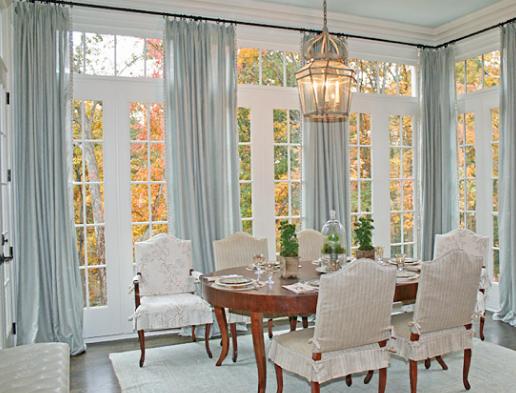
NW Mizner lantern, interior design by Liz Williams.

NW Lucien table, interior design by David Mitchell.

NW Gabrielle sofa. Architecture by William Hefner.
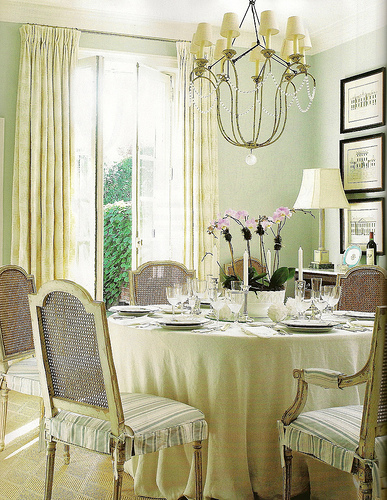
NW Italian chandelier, interior design by Anne Hepner

NW Circolo Bureauplat Major (to the right of fireplace). Interior design by Jim Hawes of Caldwell Beebe.
 .
.
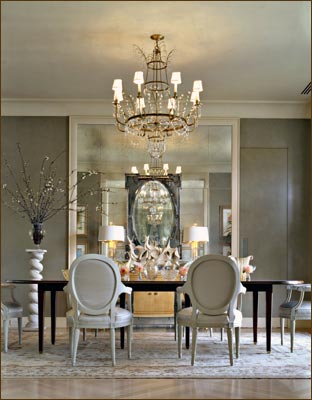
NW Swedish chandelier. Interior design by Jan Showers.
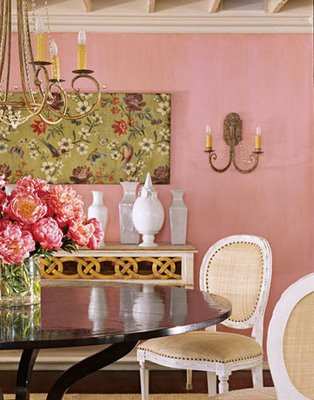
NW Baltic console. Interior design by Suzanne Kasler.
NW Baltic console, interior design by Eric Cohler.
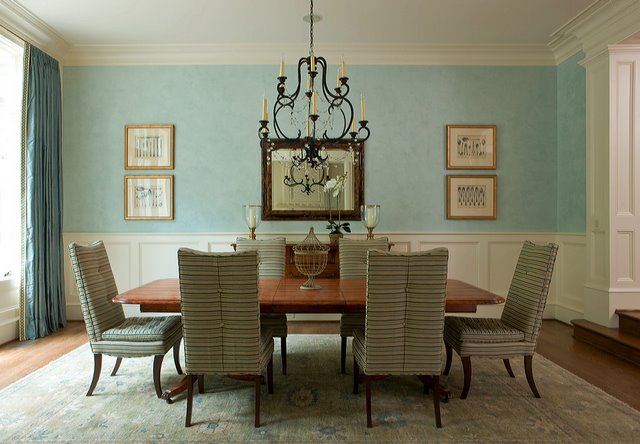
NW Avignon chandelier. Interior design by Sally Steponkus.
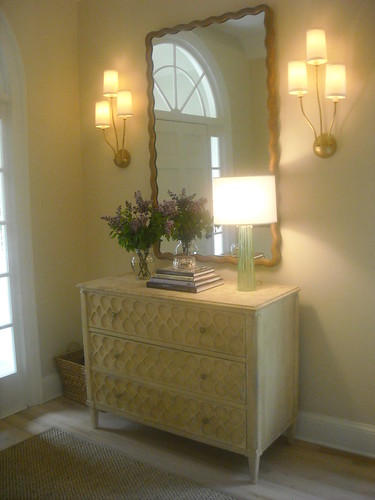
NW Beaton mirror, my entry.
For more information on Niermann Weeks products, please visit their web page. Eleanor McKay also has a blog, and the latest entry is a particularly fascinating account of the launch of John Saladino's new fabric line at the Niermann Weeks New York showroom.
To subscribe to my blog by email, click here.
To follow my blog on facebook, click here.
To visit my blog store, click here.


![img_allwhiteandbluedelight_10[1]](https://blogger.googleusercontent.com/img/b/R29vZ2xl/AVvXsEgCLZ8x9oLw4gQUXs_WPe3y7oERbZojlHP2tgtSmagD2m75RUwDJESQ1ZBH64SUiDJ9uMj5q3KyOsBFWAth984ojfE6lsiYNspLPQnOmZy5nfVvpHpIbEhwUUqNNRkOQdRHhKt633T2DOc/s1600-h/img_allwhiteandbluedelight_10%5B1%5D%5B3%5D.jpg "img_allwhiteandbluedelight_10[1]")
![img_allwhiteandbluedelight_1[1]](https://blogger.googleusercontent.com/img/b/R29vZ2xl/AVvXsEjI6nYZsYtmAz7TvdTjVheCj-SonOKDSEpF-qNfORBmuIOnN0opkJOV19UD7T5dp1tMtMy50551ut8UdkagFMdiK7f07FrknVUBFIVdiXuB8XELH6g_6Wc3lWt1Ht0X-tljt_wCpHWOEVM/s1600-h/img_allwhiteandbluedelight_1%5B1%5D%5B3%5D.jpg "img_allwhiteandbluedelight_1[1]")
![img_allwhiteandbluedelight_2[1]](https://blogger.googleusercontent.com/img/b/R29vZ2xl/AVvXsEhE0qTmUOKg2aFeKxF-FlES7-LdKv57tR03Wxf-r7Vw9zvUuW4zKxdQqNu6rlYQDyzCHGXfiTLrX0PJyiZDlf6DhT3N-UZkRkKjeuw_gy0XmvRMTqG8TeG4OCXYLkE8iq6mkz87Y44DITc/s1600-h/img_allwhiteandbluedelight_2%5B1%5D%5B3%5D.jpg "img_allwhiteandbluedelight_2[1]")
![img_allwhiteandbluedelight_4[1]](https://blogger.googleusercontent.com/img/b/R29vZ2xl/AVvXsEg7Et82fGctXtwi9cTtkO1eEsf6Up_FfwEIsEmIcF6cvWZ-J4I_BWXYyqat5zbExw6q0EtaLCoeVTOfrkIivQXp4c-_rsgTkQEH20KFnlG3ipLpESIVZJD66riMbCnFDtuUN-KE9Hicz6g/s1600-h/img_allwhiteandbluedelight_4%5B1%5D%5B3%5D.jpg "img_allwhiteandbluedelight_4[1]")
![img_allwhiteandbluedelight_3[1]](https://blogger.googleusercontent.com/img/b/R29vZ2xl/AVvXsEhwuynYHRb_F9oHs5KYByXt6uU0EZibgWd1Ht8TbDHbvnQViCEqbad15axZlI288PMSoOWq2HxlfRTCjKLH_Y_Nbdcc8O8IHBr7GcAnepsz_AGKBWKyjtGmZ54RC9FRZ2maOMct2kKjx00/s1600-h/img_allwhiteandbluedelight_3%5B1%5D%5B3%5D.jpg "img_allwhiteandbluedelight_3[1]")
![img_allwhiteandbluedelight_7[1]](https://blogger.googleusercontent.com/img/b/R29vZ2xl/AVvXsEiAmBlJmBpdKi0p9aivvC2MpTtXBBLPZyD3Ej42n74WfQjg2JwjckUdlDJUcoctv1B7tzz_oVlnaoh2dxRwbj38DQ2jrEqjI_549QSuNX_SFJyv3eXMKHwGe-d1M7p9bfwAIsVupOMCiZ0/s1600-h/img_allwhiteandbluedelight_7%5B1%5D%5B3%5D.jpg "img_allwhiteandbluedelight_7[1]")
![4389853598_cb93312eb9_b[1]](https://blogger.googleusercontent.com/img/b/R29vZ2xl/AVvXsEgVHvWQmcLgNkqfl9jfLyp28gEIZ3NLsA6M1OA8toyj-7VJbtf19yd8b676ShCDKr4UcznlMCRLWcyUQ6DzmlmHyA83F3saARnOdh-LMVr5_5GtcBDd0lGeFBacz0XWPZ8bCFiXF5UY-mg/s1600-h/4389853598_cb93312eb9_b%5B1%5D%5B3%5D.jpg "4389853598_cb93312eb9_b[1]")
![4389085039_fb7e2eb1ca_o[1]](https://blogger.googleusercontent.com/img/b/R29vZ2xl/AVvXsEiyISDXGmdDC6XmPsalZ-dq7J7ZlWUYBDBmH2tmgAxyZvElraSEI5Qbe5rjUSK3HPqZGs9SMLJ1PRDKwhiW8xZmHzCe2RmoMvc-EZ8A0skC8YL8_hoxqkZ7Xs42xygpAn7gr5gp3gUzv50/s1600-h/4389085039_fb7e2eb1ca_o%5B1%5D%5B3%5D.jpg "4389085039_fb7e2eb1ca_o[1]")
![4389854678_313ca17d77_b[1]](https://blogger.googleusercontent.com/img/b/R29vZ2xl/AVvXsEjgsYYgE5etSWwmO4KfYB3slM0VsYgJa3ChN8RYIAhGmNnGXUBFru0XMvHwO2HBUIYLY4P8qCzK1XPcTgv-bWR4CiVs_Mltpimky_JjQ-1f9ix1HHgGN4DiO0lSdkctjxsHt3KNiQj2zbU/s1600-h/4389854678_313ca17d77_b%5B1%5D%5B5%5D.jpg "4389854678_313ca17d77_b[1]")
![img_allwhiteandbluedelight_9[1]](https://blogger.googleusercontent.com/img/b/R29vZ2xl/AVvXsEh7P0CQ5muBAY9Po7UniCzvKnuwc4K7af_9ODly2KwFX4koOFpirRldICIdZ5dDuU4JhI7wUYXgFF1QfbFGgO7z5HP2FFRCiMlbXyeJd5ZzAFy9-gL1dmG_H_oeiHR_ZcAhBYaj18RG85M/s1600-h/img_allwhiteandbluedelight_9%5B1%5D%5B3%5D.jpg "img_allwhiteandbluedelight_9[1]")
![4389838516_4c38b8f799_o[1]](https://blogger.googleusercontent.com/img/b/R29vZ2xl/AVvXsEiAomQoIldYsifJKqfJ5TUcweTaRzqxuHygh9ZoSopMhdZGOIaYVgqiSS0l2ZmpFkPKGpoj_rURM5O23mPRoCr_gGe8vBDueaaqcUQttz7GbnfJudXHzz9xAIY6L-hvpj4wLtCQ7FCQUaM/s1600-h/4389838516_4c38b8f799_o%5B1%5D%5B4%5D.png "4389838516_4c38b8f799_o[1]")




![4173502955_0d64bbcf66[1]](https://blogger.googleusercontent.com/img/b/R29vZ2xl/AVvXsEgUGIeIcGO08WiHBmrIO5jGAzc2d0RK9sA8lVvYz8teGXgvd2szt4NNDAXSd0UZF72ohRZ7E5LJSU3hmzduKmh1F-5ApQUaT-JGcHaHV7fDh7_j6YDGxtF-ZgZHsMGeQgRLk5dVZ7wEdSo/s1600-h/4173502955_0d64bbcf6613.jpg "4173502955_0d64bbcf66[1]")
![4159304731_a34e34c58c_b[1]](https://blogger.googleusercontent.com/img/b/R29vZ2xl/AVvXsEh30uJV94T2OrmO4GM7UN3KRdwQeNJA6m0KCdMpUL5VC1q2YrKVbcfZYeTHM4-syShhS3jv678_Ma1U_Nh7ghPhu_0aWLLnZVjnLIoW2GQhEij5P74PlPWGPTEGb9-DE5DKyCQQOPlgGxQ/s1600-h/4159304731_a34e34c58c_b14.jpg "4159304731_a34e34c58c_b[1]")
![4157175871_dc294fbf50_b[1]](https://blogger.googleusercontent.com/img/b/R29vZ2xl/AVvXsEginRvz5pQyKt7aVXRNjEadSXizcZhVCrvi3SX-M4SyCjLHWPjl07LghIPWRr-3SfEO0oHpwPVUt6XgHmygsLgV9WxHVG6jX3fWgsAxe8CYabojbZ_hawg8ttZ6sMJHsd5oV4FaPvbB1eM/s1600-h/4157175871_dc294fbf50_b13.jpg "4157175871_dc294fbf50_b[1]")
![4157275846_84d300ddf7_b[1]](https://blogger.googleusercontent.com/img/b/R29vZ2xl/AVvXsEjRLQp_CfPoprYuRTqw5sUpGpuQdtZaAJkeisiii44_Cx1jqQ600eB9oCZk5rWzaYCrbTlZXaltvodHx_Kr07EhBirCr_AwUtavWj9LVPEOffXHhqEtqBEiPXokABdX45uY9juuLkn9hxk/s1600-h/4157275846_84d300ddf7_b13.jpg "4157275846_84d300ddf7_b[1]")
![4157238342_1531a87162_b[1]](https://blogger.googleusercontent.com/img/b/R29vZ2xl/AVvXsEgXZ1emgc9gBa8KsUmwTj6bguJxjQgwqBRoshbj2NrNXV-xcJt1xoTKPNvk07xfnYgb8C_a1Rd_TGERWSDfFGc6vvhj2W0gOTDMx0UV1jqsyZ1DZrn2wWHN-TEvhxKcF8aQFSkRLMovjVo/s1600-h/4157238342_1531a87162_b14.jpg "4157238342_1531a87162_b[1]")
![4157239830_ca3e3defd4_b[1]](https://blogger.googleusercontent.com/img/b/R29vZ2xl/AVvXsEh_l6Q7XwRrXe3eFM64v8dVPtFRkgW2PHEzJ1H4b40cNbSbbkSbtwi-0glUsYZTwgK-kZxSzMTCW49LPOm8px3MkPEvzqxxZEBcRnAB58imZW_68qc9kcvKal7G-AyCWC-Uu6DV2g5jAFk/s1600-h/4157239830_ca3e3defd4_b13.jpg "4157239830_ca3e3defd4_b[1]")

![4156480277_d094d7db5a[1]](https://blogger.googleusercontent.com/img/b/R29vZ2xl/AVvXsEgESeIt0YEM34fimjGoQtsfHJ4jGR0AsSjMdlpVfF4vd8XfnW2heu5pL-m_pcYbovRMdM_7sAHMh1Ft3Euu69f-h-f1Hj-ObRev_vEfwoY1p6aRJDibnIvt6ZOCJvqfpdD2LRLfUuqdahU/s1600-h/4156480277_d094d7db5a13.jpg "4156480277_d094d7db5a[1]")
![4157242684_9a1d74e894_b[1]](https://blogger.googleusercontent.com/img/b/R29vZ2xl/AVvXsEh72SxOIPUFjMP6g7EfeC10WlNoryub-JTJqHY5k_BjFrTOXRp-dBT3J7JYSw_WpTL_V7K5z3a20jERrCB3phkt-t6bTHiupKuX5wCo2YhGUVNaQSSWqaZ0rUlKeX1hao7H5j9af5mouME/s1600-h/4157242684_9a1d74e894_b13.jpg "4157242684_9a1d74e894_b[1]")
![4170014091_2805362d50_b[1]](https://blogger.googleusercontent.com/img/b/R29vZ2xl/AVvXsEiixSsvn7ixS0kaSPqEKT_hrq-HXn91vylkuR__ZowkNC14w-5WoHdBzdnYSUcmOtVPta33pUfzX-ZtoTmolzwt-psdlG1zFSV1KCLcy1R50IW5TBG_d_VJaB_ZILUKqGGoNuQki1cukEs/s1600-h/4170014091_2805362d50_b13.jpg "4170014091_2805362d50_b[1]")
![4170001327_d7575e1578_b[1]](https://blogger.googleusercontent.com/img/b/R29vZ2xl/AVvXsEh8i-3h30Jdeq5Nqt2K_tYF3qFz6xGNK_UyzF0lwQo2QWIbFmFmMAOIOOn3bnBdz0Uqe-z24jjNw50MTUMo2YyKFfqT346gXRgl26hHgUwDJ_bGb3XV2ziz9wIOocVA76wTY7vOUJLiADM/s1600-h/4170001327_d7575e1578_b13.jpg "4170001327_d7575e1578_b[1]")
![4157246984_5ceaa3a2c0_b[1]](https://blogger.googleusercontent.com/img/b/R29vZ2xl/AVvXsEj_gLSQy3OLPghh5r23LzXhXuqioDi0GpMTfsKvd0WyA15gPGv9LgSLh5MVMvn0_qhhskzXoNGTaLnRtsPz-AawxHfKru-daArnkMz_lZwcpYsXFEOO9iyCUmJiSa6VBkwsFcihMAObrwc/s1600-h/4157246984_5ceaa3a2c0_b15.jpg "4157246984_5ceaa3a2c0_b[1]")
![4170787598_86e2b11da6_b[1]](https://blogger.googleusercontent.com/img/b/R29vZ2xl/AVvXsEgZjILLz39BVK_mNZ3j5iHTiV7mpfcG6lGEO04jHDyg_N7a7OLvtsKzlT2lQPJmezBMRYAeB_XpRbwWD92UPLOzz0kSd9oX9o39gykrKSb19_dNLhQdnh-TDMaZSQBYilz1aAhebXrRgf8/s1600-h/4170787598_86e2b11da6_b13.jpg "4170787598_86e2b11da6_b[1]")
![4156499205_b2fce69ec2_b[1]](https://blogger.googleusercontent.com/img/b/R29vZ2xl/AVvXsEh6PyljWKML7W_eOZ9jgxNpY8d809KrO49DB-L41UoM4ZosFgC6v0e9qbGBXIboLSMfIVImdj-8ll8YF9_CICtD9pwg_jeZkSU0E3m2Zp6O1YjKJkpRrQl9S3s3Of-zX1mL3coy3_awLkc/s1600-h/4156499205_b2fce69ec2_b13.jpg "4156499205_b2fce69ec2_b[1]")

![4173724895_8c695fdd94_o[1]](https://blogger.googleusercontent.com/img/b/R29vZ2xl/AVvXsEjMCgNrgHOfN-lMWfVArlBeI-ZP6HHmvQZpYnlc8dsC_vByAtCGDQZJRvl8hlmH0tuHKK9J0LhvRCkpnPrVelrzwIAUqZVTwQfYsW9D2CdjLSdPe9cY1LFL67KX85ry-EPbVhlGxVtXW6Y/s1600-h/4173724895_8c695fdd94_o13.png "4173724895_8c695fdd94_o[1]")
![4173718731_df97755991_o[1]](https://blogger.googleusercontent.com/img/b/R29vZ2xl/AVvXsEhnJ4RDZLnpbr8rk0tL0-yCh4pOhd2nzyIyGLZlfVlyV98O3o9gb3N5yj7Poi_aiNAeNfcYICq6OrTro7DPXX5r039ndk-bAJeD5rpSegSNka5GtGuBU7vTezv_y7SREuKtjwK9lSd3NLk/s1600-h/4173718731_df97755991_o13.png "4173718731_df97755991_o[1]")















.jpg)


